Fanatical Basketball
- 4.4
- Rating
- 10.00M
- Installs
- Free
- Price

 Analysis by App-foxy
I approached Fanatical Basketball as a quick sports game rather than a full basketball simulation, and that distinction matters. It is a free Android game from CanaryDroid, aimed at anyone who wants to pick up a phone and play without first learning a complicated control system. The presentation tries to make each match feel energetic and immediate, while the basketball theme gives the short sessions more purpose than a completely casual arcade game.
My first impression was that it is easiest to enjoy when I treat it as a few-minute distraction. It does not need the commitment of a console sports title, and it is more approachable than a detailed basketball simulator. At the same time, players who expect deep team management, a serious competitive ladder, or the precision of a dedicated console-style game may find its scope limited. The experience sits between an arcade sports game and a lightweight basketball session, and its success depends on whether that middle ground suits you.
How the game feels in everyday play
The most useful way to understand this game is to imagine a normal phone-gaming situation. I might have a short break, open it for a match, and focus on making the next play instead of managing a large roster or studying a long tutorial. That low barrier is one of its strongest qualities. The sports setting is instantly familiar, so I do not need to spend much time learning the basic idea before I can decide whether I am having fun.
You May Also Like

 Google Keep - Notes and lists
Google Keep’s Quiet Growth Shows the Appeal of Simpler Notes
As mobile work gets busier, Google Keep keeps winning a simple contest: capture a thought quickly, find it later, and get on with the day.

 Blood Strike: 2.5 Anniversary
Blood Strike’s Loadouts Turn Every Drop Into a Tactical Gamble
A close look at Blood Strike’s custom loadouts: how fast access to signature weapons reshapes its battle royale rhythm, rewards preparation, and narrows the gap between fights.

 Pandora - Music & Podcasts
Pandora’s Music Is Easy to Start, but Harder to Recover
Pandora’s strength is its low-effort path from a seed to a station. Its weak spot is how much confidence it asks you to place in connection, setup, and quiet recovery.

 8 Ball Pool
 Is Built on Rivalries, Rematches, and Routine
A close look at the rivalries, rematches, shared routines, and unanswered safety questions that turn a quick pool match into a persistent mobile community.

 Samsung Music
’s Quiet Strength Is Playing What You Already Own
Its reach comes less from spectacle than from dependable access to a personal library. That simplicity is both the app’s strongest retention engine and its ceiling.

 AccuWeather: Weather Radar
AccuWeather Review: A Quick, Clear Forecast for Everyday Decisions
For everyday plans, the best forecast is the one you can understand quickly. AccuWeather makes rain timing, radar, and local conditions easy to act on, with a few trade-offs.
More From Our News Desk



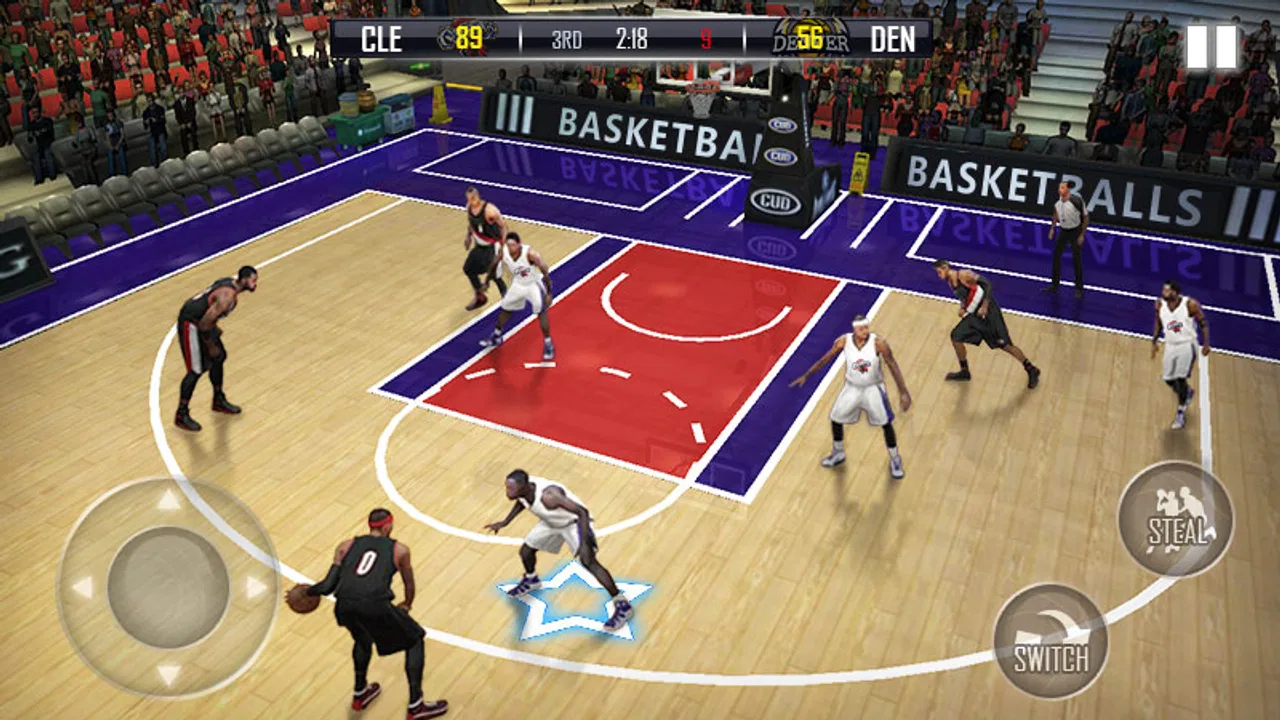
Its 3D presentation gives the action more personality than a flat score-chasing game. Players who enjoy the visual side of mobile sports titles will probably appreciate that effort, especially when they want something that feels like basketball rather than a generic reflex challenge. Still, a three-dimensional view can also make mistakes feel less predictable than they would in a simple two-dimensional game. When timing or positioning goes wrong, I may need a little practice to understand whether the problem came from my decision, my control input, or the way the action was shown.
I would recommend starting with short sessions and paying attention to what actually causes successful plays. Instead of tapping rapidly whenever the ball is near the basket, I found it more useful to slow down, watch the movement on screen, and repeat the same type of action until the result became familiar. That approach turns the opening period into a practical lesson. It also helps reveal whether the controls feel comfortable on your particular phone, since screen size and touch response can change the experience considerably.
The best early habit is to learn consistency before chasing speed. In a basketball game built around quick decisions, repeating a reliable action is often more satisfying than trying to force spectacular plays immediately. This is especially helpful for younger players, who can enjoy the sports theme without needing advanced knowledge of basketball tactics. The Everyone content rating makes the game suitable for a broad audience, although parents should still remember that the game includes optional purchases.
Free entry, paid pressure, and sensible spending
The game is free to download, which makes it easy to try without making a commitment first. Its optional in-app purchases range from $1.99 to $99.99 per item, so the spending range is wide. That is the part I would discuss with a friend before recommending it to a child: the initial download costs nothing, but the presence of high-priced purchase options means the phone’s purchase controls and account settings deserve attention.
I do not see a reason to spend money during the first sessions. A better approach is to play long enough to decide whether the controls and match rhythm are genuinely enjoyable. If the basic game already feels repetitive or awkward, spending will not solve that underlying issue. If it does become a regular pastime, I would still set a personal limit before opening any purchase screen, because a large maximum item can make impulse decisions more expensive than expected.
The purchase information tells me the game has optional paid items, but it does not by itself establish how much those items affect progress or competition. I would not assume that paying is required, nor would I promise that it has no effect. That distinction is important for anyone choosing a sports game based on fairness. My practical advice is to judge the free experience first, keep purchases disabled for younger users unless an adult is supervising, and treat every paid item as a convenience rather than an automatic upgrade to enjoyment.
For a normal commute or a short evening break, the free version is the sensible starting point. Someone who wants a one-time purchase with a clearly fixed cost may prefer a premium sports game instead, provided its pricing model and features suit them. Someone who enjoys trying mobile games without paying upfront will find this title easier to sample, but should be comfortable with the possibility of purchase prompts.
Progress, repetition, and the feeling of pressure
What kept me interested was the simple desire to improve the next attempt. Sports games naturally create that loop: I make a poor decision, try to correct it, and feel rewarded when the same situation goes better. That loop works best when the game gives me enough control to believe my choices matter. It becomes less appealing when I feel that repeating an action is the only path forward or when progress seems tied more closely to spending than to practice.
I recommend using a small personal goal for each session. One day, that might mean avoiding rushed shots. Another day, it could be learning how the defense reacts or finding a more comfortable way to handle the controls. This makes the game feel less like an endless demand for progress and more like a series of manageable experiments. It is also a useful way to decide whether the title has enough depth for you: if you can identify new decisions to work on, the repetition has value; if every session feels identical, the appeal may fade quickly.
There is a trade-off here. The accessible design makes it friendly to casual players, but a player seeking a detailed simulation may want more control over tactics, lineups, and long-term strategy than this kind of mobile experience offers. I would choose it for immediate basketball action, not for building a complete sports-management routine. That difference should prevent disappointment after installation.
Another practical tip is to play with notifications and purchase habits in mind. I would avoid opening the game when I am distracted, tired, or trying to fill a very short gap with no patience for repetition. A quick session can be enjoyable, but frustration is more likely when I expect a full simulation from a casual mobile format. Setting a clear stopping point after a few matches also keeps the experience from turning into aimless repetition.
Fairness and competition: what I can judge responsibly
Fairness is difficult to assess from the presence of purchases alone. The confirmed purchase range shows that the game can offer optional paid items, but it does not explain exactly how those items interact with progress, performance, or competition. I therefore would not label the game pay-to-win, and I would not claim that spending is irrelevant. The honest conclusion is narrower: players who care deeply about equal competition should approach with caution and observe how the game handles advancement during their own use.
That uncertainty does not make the game unusable. It simply changes how I would recommend it. For solo, casual, or family play, the purchase question may be less important than whether the controls are enjoyable. For a player choosing a title mainly for a level playing field against other people, clearer purchase details would be more valuable before investing serious time. In that situation, a game with a transparent premium model may be a better fit.
I also think fairness includes the way a game respects attention. A short sports session should feel like a choice, not an obligation to keep returning. My advice is to notice whether you are playing because the basketball is fun or because you feel pushed to recover progress. If the latter becomes stronger, pause before buying anything. No optional item can guarantee that the underlying loop will become more satisfying.
For younger players, the practical fairness issue is less about competitive theory and more about control over spending. Since the game is rated Everyone and is free to start, it can look harmless at first glance. An adult should still review the device’s purchase protections and explain that free installation does not mean every part of the game is free. That conversation is more useful than assuming the age rating answers every question about money.
Who should install it, and who should choose another game?
I think this is a good match for casual basketball fans, younger players, and anyone who wants a visually presented sports game without the weight of a large console-style package. It is also suitable for people who enjoy learning through repeated short attempts rather than reading long instructions. The broad age rating and free entry make it easy to share as a suggestion, as long as the optional spending is handled responsibly.
I would be more hesitant to recommend it to a serious basketball enthusiast who wants exact simulation, deep tactical control, or a highly structured competitive ecosystem. I would also steer away players who dislike any uncertainty around optional purchases. A premium alternative with one clear payment can be more comfortable for that audience, even if it has less immediate accessibility. Likewise, someone who wants a completely relaxed game with no pressure to improve may prefer a puzzle or idle title instead of a sports game built around repeated performance.
The comparison with usual mobile basketball alternatives is fairly clear. A detailed simulator is likely to offer more strategic control and a longer management layer, but it may demand more time and patience. A very simple arcade game may be easier to understand, but it can lack the sense of being inside a basketball match. This title appeals to the middle: more visual and sport-focused than a basic reflex game, yet less demanding than a full simulation. Whether that is a strength or weakness depends on what I want from my phone at that moment.
Device compatibility is also straightforward at the platform level: the game requires Android 5.0 or later. That makes it available to many older Android devices, although the actual comfort of play will still depend on the phone’s screen, touch response, and general performance. I would leave some storage and close unnecessary apps before playing on an older handset, not because I can promise a particular result, but because a smoother phone environment makes timing-based sports games easier to judge.
Trust, longevity, and the details worth checking
CanaryDroid released the game on November 24, 2016, and the current version is 1.0.17. Its age suggests that this is an established mobile title rather than a brand-new experiment. The public response is also substantial: it has an average rating of 4.4 from around 331 thousand ratings, with over 10 million installs and around 18 thousand written reviews. Those figures show broad reach and a generally positive reception, but they should support—not replace—my own judgment about controls and spending.
Popularity is useful when deciding whether a game deserves a trial, yet it cannot answer every question a careful player has. I would still read recent user comments before investing money, especially comments that discuss progression, purchase value, device behavior, and whether the current version feels stable. I would also check the purchase confirmation screen carefully rather than tapping through quickly. These are small habits, but they matter more than a high rating when the concern is personal fit or financial control.
There are a few unknowns I would keep in mind without filling them with assumptions. The available facts establish the game’s price model, age rating, developer, version, and audience response, but they do not provide a complete explanation of how every paid item affects play or how long-term progression is balanced. That means my trust verdict is conditional: I trust it as a free game worth trying, but I would not tell a friend to spend heavily before testing the core experience and understanding the value of any specific purchase.
The same careful approach applies to longevity. The game may remain enjoyable for a long time if the basic match loop continues to feel responsive and improvement stays meaningful. It may be less satisfying for someone who needs frequent new systems or a deep seasonal structure. I would not install it expecting a guaranteed long-term hobby. I would install it as a low-risk trial, then keep it only if the basketball action itself earns that space on my phone.
My final recommendation after weighing the trade-offs
My overall view is positive but measured. Fanatical Basketball is an accessible free sports game with a 3D presentation, a familiar basketball premise, and enough immediate appeal to justify trying it. I like it most as a short-session game where I can practice decisions, enjoy a few matches, and stop without treating the experience as a full simulation. The broad audience and large player base make it an easy recommendation for casual users who know what kind of game they are getting.
The important condition is spending discipline. With optional items priced from $1.99 to $99.99, I would not hand the phone to a child without purchase protections, and I would not buy anything until the free play has proved its value. I would also avoid describing the competitive economy as definitively fair or unfair, because the purchase facts alone do not establish that. Players who need complete transparency should compare it with a clearly priced premium alternative.
If you want quick basketball on Android, have Android 5.0 or later, and are happy to judge the game through its free opening experience, I think it is worth a try. If your priority is deep simulation, a fixed-cost model, or a carefully documented competitive environment, look elsewhere first. My trust verdict is simple: install for the free gameplay, spend only with a clear reason, and let the quality of the matches—not purchase pressure—decide whether it stays.
FAQs for Fanatical Basketball
01What is Fanatical Basketball?
Fanatical Basketball is a basketball-focused mobile game designed for players who enjoy quick matches, competitive challenges, and improving a team over time. Before downloading, keep in mind that the experience may combine arcade-style controls with progression and team-management elements. The exact features, available modes, and presentation can vary depending on your device, operating system, and the version currently offered by the developer.
02Is Fanatical Basketball free to download and play?
Fanatical Basketball may be available as a free download, but users should check the store listing carefully for in-app purchases, optional upgrades, advertisements, or other paid content. Free access does not always mean that every team, item, mode, or progression option is immediately available. Reviewing the purchase information before installing is recommended, especially if children will be using the device.
03Does Fanatical Basketball require an internet connection?
The connection requirements can depend on the specific game mode and version of Fanatical Basketball. Online matches, rankings, advertisements, cloud features, or account-related functions may require an active internet connection, while some basic gameplay could potentially work offline. If reliable access is important to you, verify the current store description and test the available modes after installation, since requirements can change through updates.
04Is Fanatical Basketball suitable for beginners?
Fanatical Basketball can be approachable for newcomers if its controls and match structure are learned gradually, but the difficulty may increase as opponents become stronger or competitive features become more important. New players should spend time practicing movement, shooting, passing, and defensive actions before focusing on rankings. Progression systems may also require patience, particularly for users who prefer not to make optional purchases.
05What devices are compatible with Fanatical Basketball?
Compatibility depends on the Android or iOS version, device hardware, available storage, and the developer’s current requirements. Basketball games may run smoothly on newer phones but experience slower performance, longer loading times, or reduced visual quality on older models. Before downloading Fanatical Basketball, check the official store page for supported operating systems, required space, recent update information, and any device-specific limitations.
Pros
- Fast-paced matches are easy to start and finish in a few minutes.
- Simple controls make the game accessible to casual players.
- Bright visuals and energetic effects give matches a lively feel.
- Progression rewards regular play with new basketball content.
- Works well for quick entertainment during short breaks.
Cons
- Gameplay can become repetitive after extended sessions.
- Some upgrades may require considerable time or repeated matches.
- The small screen can make precise movements difficult at times.
- Visual effects may feel distracting during intense plays.
- Performance can vary on older or less powerful devices.

Fanatical Basketball
Gallery